
Independent compliance testing from methodology through defensible reporting.
Rulint performs the testing through a governed lifecycle that connects test design, population and sampling methodology, evidence-based execution, client collaboration, findings, quality review, and final reporting.
Five connected stages. One governed testing record.
Each stage establishes the basis for the next, preserving the relationship between methodology, population, evidence, results, findings, client responses, and the final conclusion.
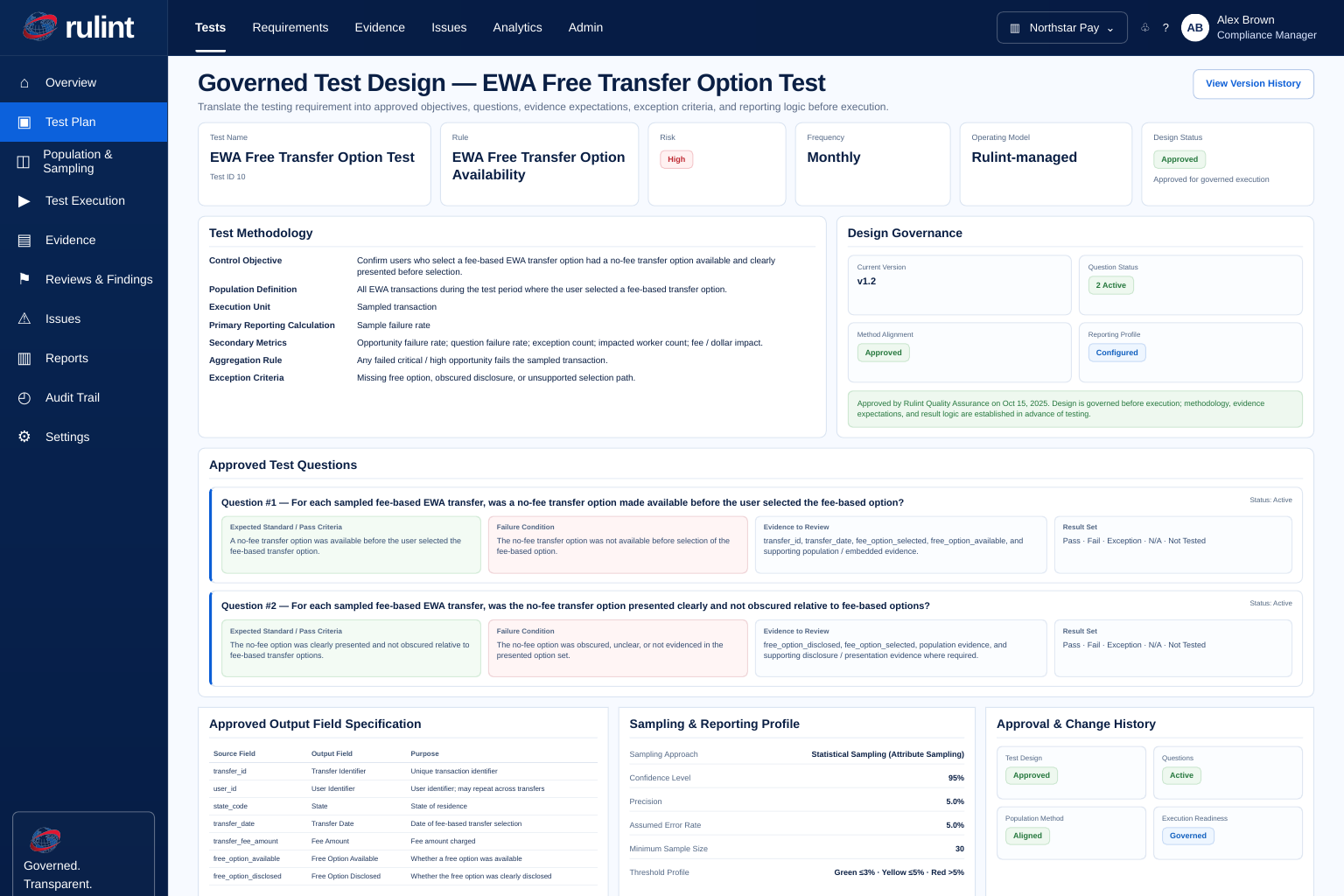
Define what will be tested before testing begins.
Compliance requirements are translated into an approved testing methodology with clearly defined questions, evidence expectations, decision criteria, output fields, sampling assumptions, and reporting logic.
- Control objective and population definition
- Approved test questions
- Pass and failure criteria
- Evidence expectations
- Reporting and calculation methodology
- Version history and approval governance
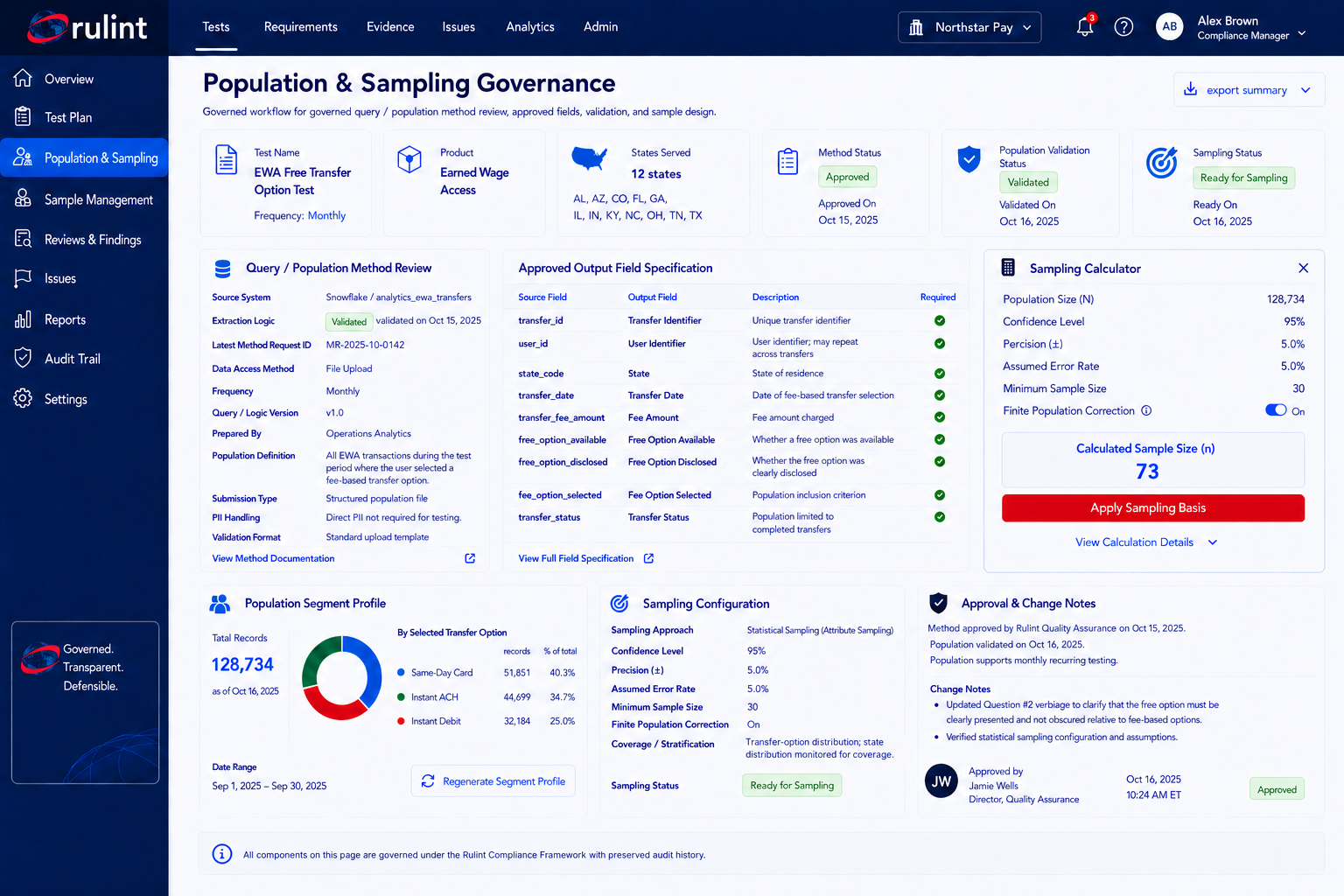
Establish confidence in the testing universe before sampling.
Rulint reviews how the population is generated, governs the approved output fields, validates the received population, evaluates population characteristics, and establishes the sampling basis before execution.
- Query or population-method review
- Approved output-field specification
- Population validation
- Population segmentation and coverage
- Statistical or judgmental sample methodology
- Sampling approval and change history
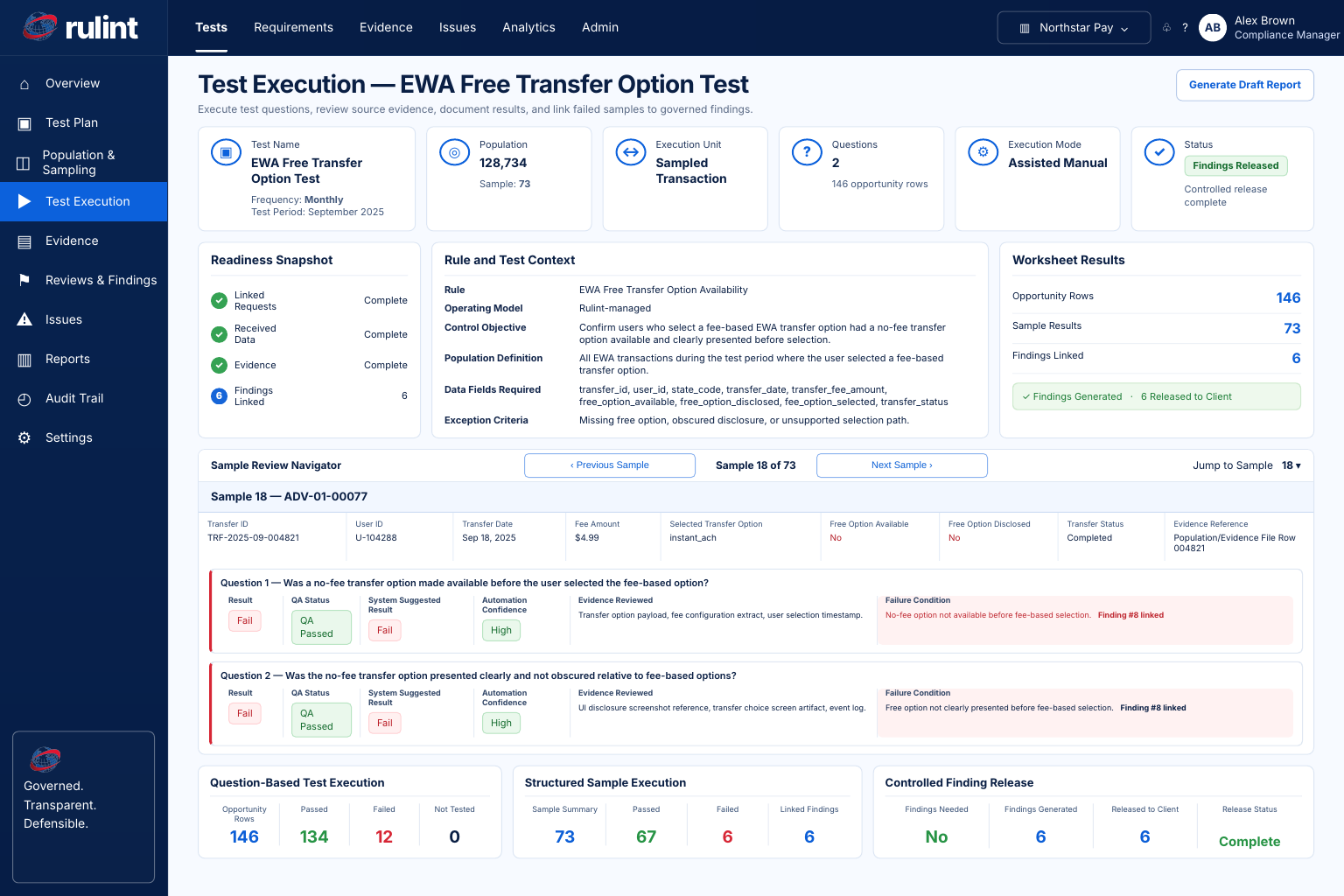
Apply the approved methodology to the actual evidence.
Each sampled opportunity is evaluated against the approved test questions and available evidence, with results, rationale, QA status, failure conditions, and findings maintained in a traceable testing record.
- Sample-level review
- Question-level testing results
- Source evidence references
- Assisted analysis where appropriate
- Human QA and result acceptance
- Controlled exception-to-finding linkage
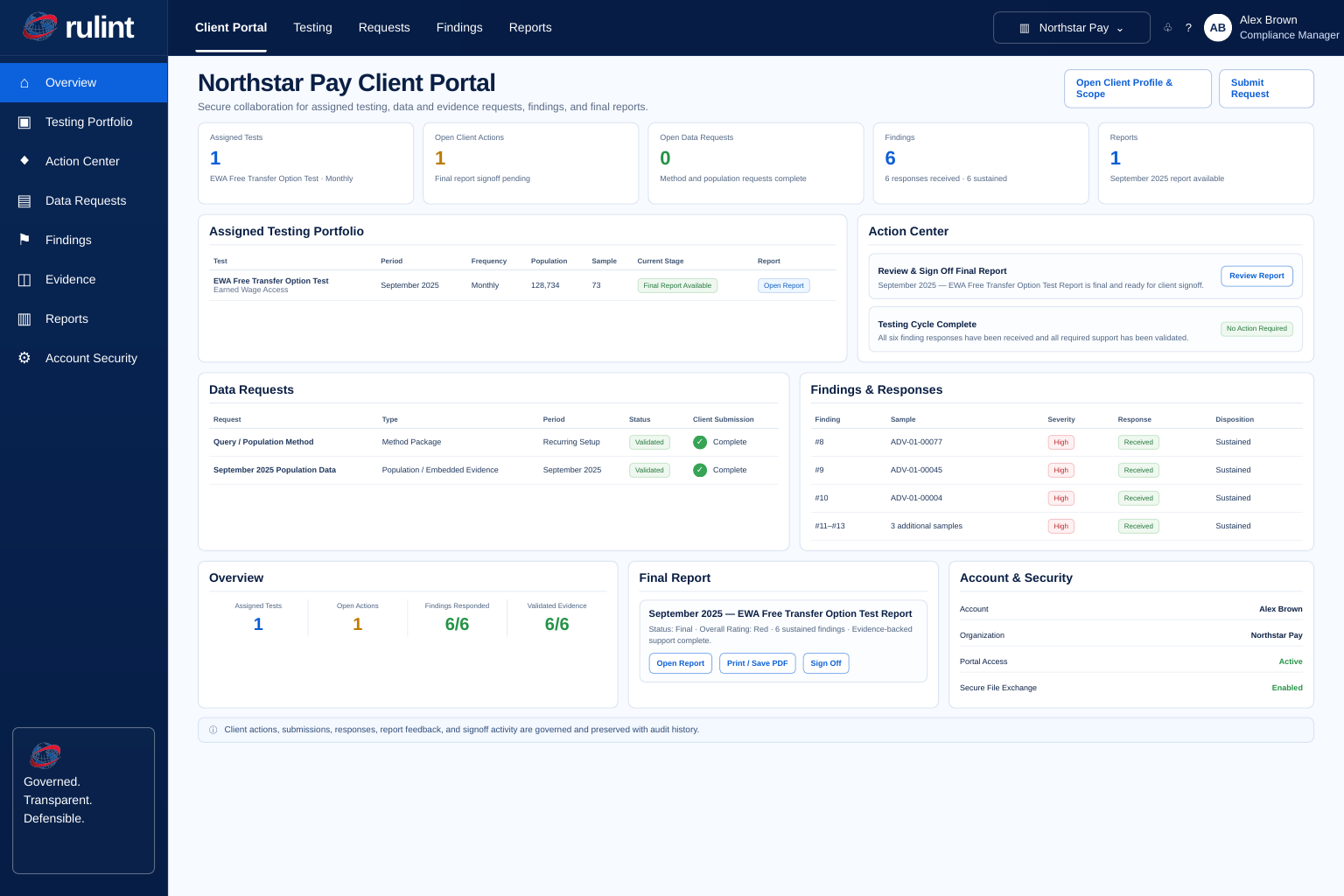
Keep client participation structured without transferring the testing role.
The client portal provides a governed collaboration layer for testing assignments, data and evidence requests, factual responses, findings, reports, and signoff while Rulint retains responsibility for the independent testing conclusion.
- Assigned testing portfolio
- Client action center
- Data and evidence requests
- Finding responses and factual clarification
- Report review and feedback
- Final client signoff
Connect the conclusion to the evidence supporting it.
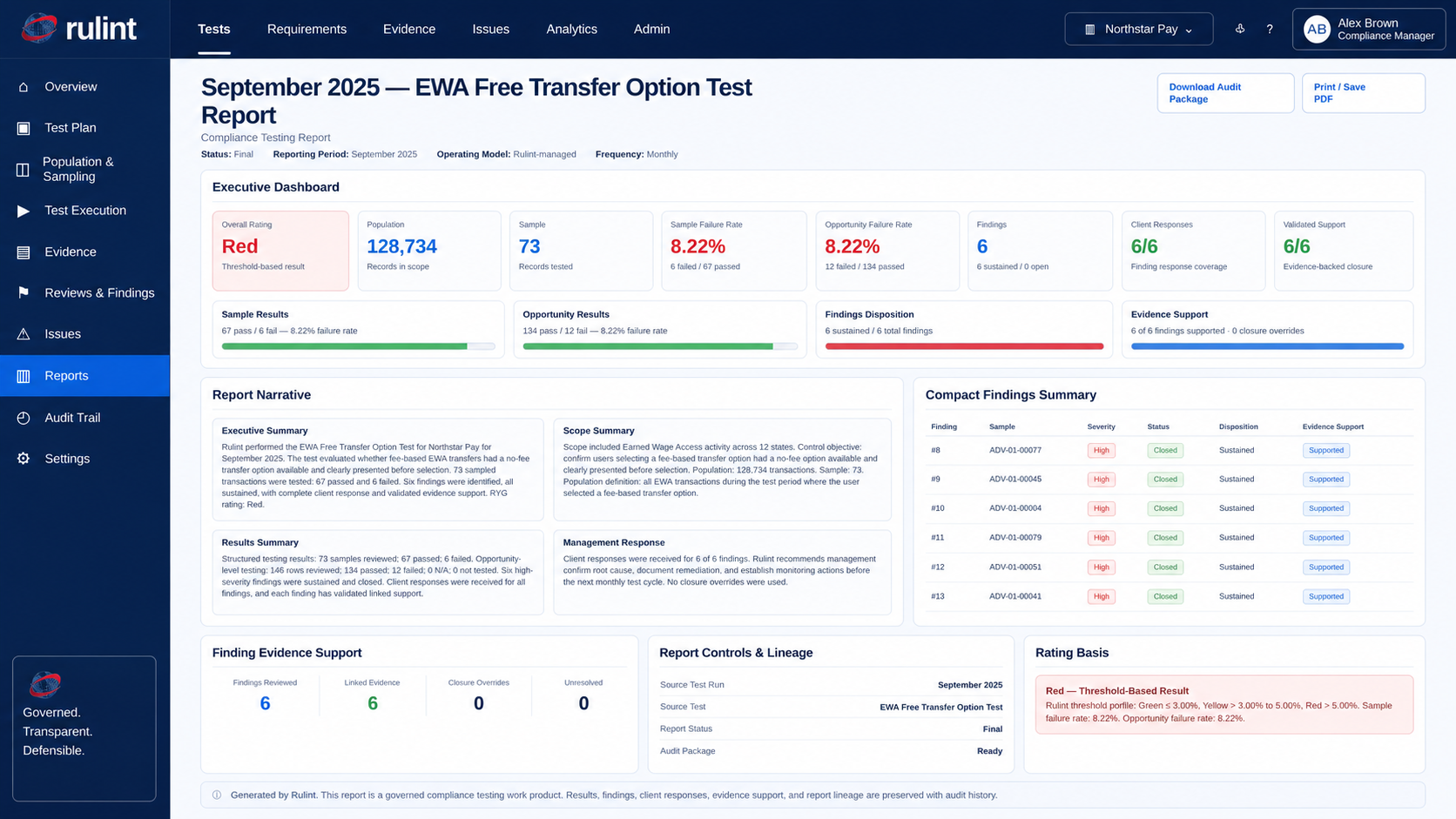
Rulint reporting brings together population and sample results, findings, client responses, validated evidence, rating methodology, and testing lineage so stakeholders can understand both the outcome and its basis.
- Executive testing conclusion
- Population and sample results
- Findings and disposition
- Evidence-backed closure
- Rating methodology
- Report controls, lineage, and signoff
Independent testing still requires structured client collaboration.
Your Organization
- Owns and operates the compliance program
- Provides applicable policies, procedures, data, and evidence
- Provides process and system context
- Responds to factual questions and potential exceptions
- Reviews governed scope or methodology changes when required
Rulint
- Designs the testing methodology
- Reviews the population-generation method
- Selects and evaluates testing opportunities
- Evaluates evidence and documents results
- Determines exception and finding disposition
- Performs quality review and delivers the conclusion
Technology-enabled. Human-reviewed. Governed end to end.
Rulint technology supports workflow, evidence analysis, traceability, and testing efficiency. Scope decisions, exception disposition, quality review, and final testing conclusions remain subject to human review.
What needs to be independently tested?
Initial scoping can begin with the applicable compliance requirement, process, control, product, population, or testing objective. Confidential client data is not required for the initial conversation.